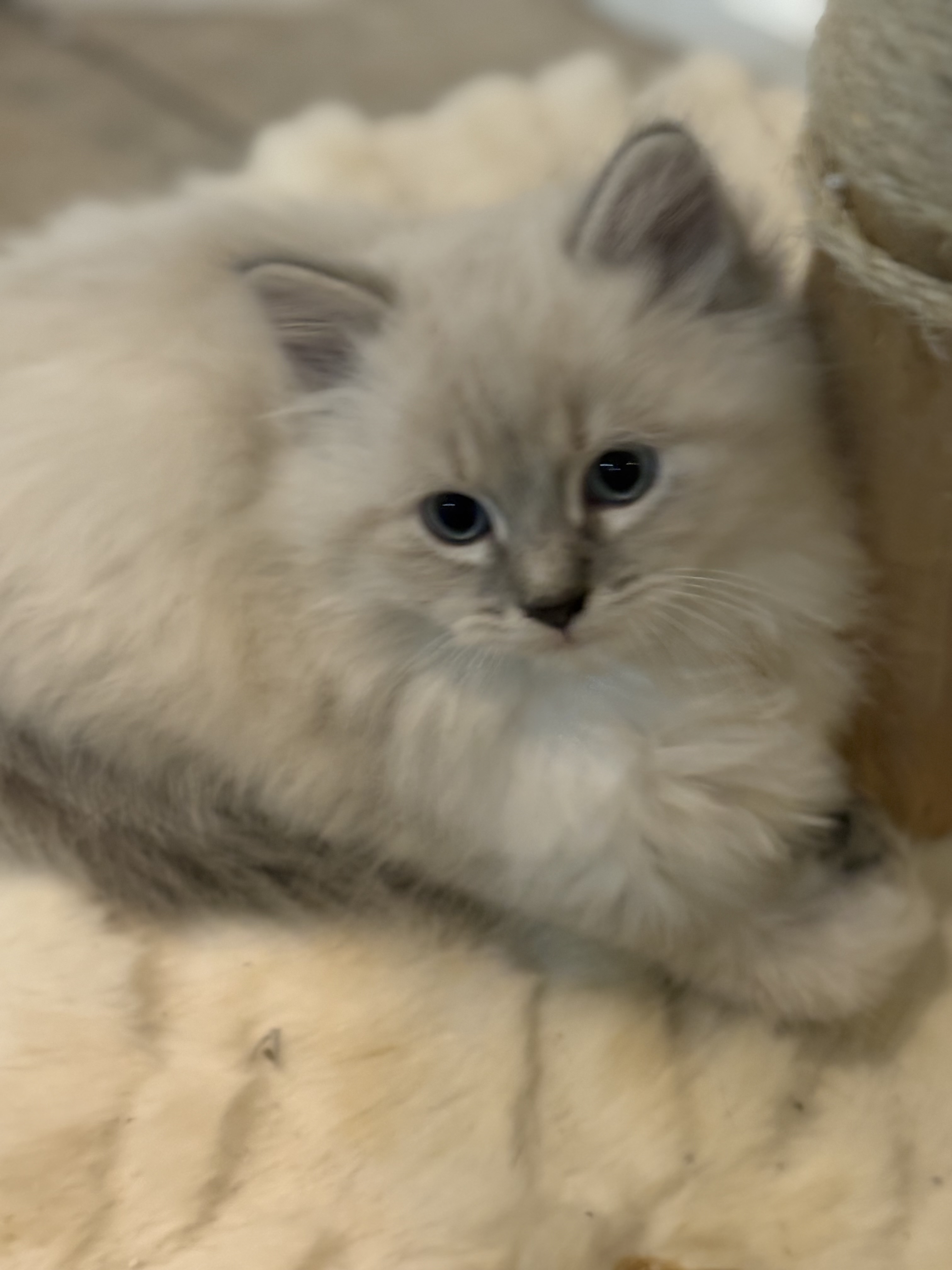
Families often discover the Siberian breed while searching for a cat that may be easier to live with when allergies are a concern. The breed has a well-known lower-allergen reputation, and some people who react strongly to other cats report fewer symptoms around certain Siberians. That possibility is meaningful, but it is not a promise that every Siberian will be suitable for every allergy-sensitive person.
The most responsible answer is also the simplest: no cat is completely hypoallergenic. Individual cats can produce different amounts of allergens, and two people can react very differently to the same cat. Learning what causes cat allergies—and spending time around Siberians before making a reservation—can help a family make a more informed decision.
What Does Hypoallergenic Actually Mean?
“Hypoallergenic” does not mean free of allergens. It generally describes something that may be less likely to trigger an allergic reaction for some people. When the term is applied to cats, it can create unrealistic expectations because there is no cat breed that produces no allergens at all.
A Siberian can still leave allergens on furniture, clothing, bedding, and other household surfaces. A person who seems comfortable during one short visit may respond differently after repeated exposure. On the other hand, some allergy-sensitive people do find that they tolerate a particular Siberian better than cats they have encountered before.
That is why Michigan Siberians talks about allergy considerations in terms of possibilities, not guarantees. A careful breeder should never promise that a kitten cannot cause a reaction.
Why Are Siberian Cats Associated With Lower Allergens?
Siberians are often associated with lower allergen levels because some individual cats may produce less Fel d 1 than is typical in the broader cat population. Reports from Siberian owners have also contributed to the breed’s reputation among allergy-sensitive families.
However, allergen production is not identical across the breed. One Siberian may be easier for someone to tolerate while another Siberian may cause a noticeable reaction. A breed label cannot predict exactly how a person will respond to a specific cat, and appearance is not a dependable substitute for direct exposure.
Families researching the breed can read our broader guide to Siberian cats in Michigan, including temperament, grooming, and family life.
What Is Fel d 1?
Fel d 1 is one of the primary proteins associated with cat allergies. It is produced mainly in a cat’s salivary and skin glands. As a cat grooms, the protein can be transferred to the coat. From there, tiny particles may spread through shedding, dried saliva, and dander and settle throughout the home.
This is an important distinction: cat allergies are not simply an allergy to long fur. A longhaired cat does not automatically produce more Fel d 1, and a shorthaired or hairless cat is not automatically safe for someone with allergies. Fur can carry allergens, but coat length by itself does not determine how much allergen a cat produces or how a person will react.
Can Someone With Cat Allergies Live With a Siberian?
Some people with cat allergies live comfortably with Siberians, while others continue to experience symptoms. The outcome depends on the individual cat, the individual person, the amount and duration of exposure, and the household environment.
A person’s experience with one cat does not guarantee the same experience with another. Likewise, tolerating an adult cat during a visit does not prove that there will never be a reaction to a kitten in the home. Allergies can also change over time.
Practical household choices—such as regular cleaning, using an appropriate air filter, keeping the cat out of a bedroom, washing hands after close contact, and grooming carefully—may help some families manage exposure. These measures do not make a cat hypoallergenic, and anyone with significant health concerns should seek professional medical guidance.
Do Male and Female Siberians Differ in Allergens?
Sex and reproductive status may influence allergen production. Intact males are often described as producing higher Fel d 1 levels than females or altered males. Even so, broad averages cannot determine how much allergen a particular kitten will eventually produce.
Choosing a female does not guarantee an allergy-free experience, and choosing a male does not mean a reaction is inevitable. Families should treat sex as one possible factor rather than a reliable test. Direct experience around Siberians remains more useful than selecting a kitten based on sex alone.
Does Color or Colorpoint Status Affect Allergies?
There is no dependable rule that a particular Siberian color, tabby pattern, or colorpoint status will be better for allergies. Colorpoint Siberians and traditional multicolored Siberians share the same need for individual evaluation.
Families should choose coat color based on personal preference, not on an assumption that a pale coat, dark coat, blue eyes, or colorpoint pattern predicts tolerance. Coat length and density also do not provide a reliable measure of Fel d 1 production.
If you are considering a kitten after evaluating allergy concerns, our Siberian kitten guide explains early care, socialization, and preparing your home.
How Can a Family Test Its Reaction Before Choosing a Kitten?
Whenever possible, allergy-sensitive family members should spend meaningful time around Siberians before reserving a kitten. Michigan Siberians offers allergy-testing home visits for a $50 fee, which is applied to the kitten purchase if the family later decides to reserve.
During a visit, allow normal contact rather than only observing from across the room. Spend time in the same indoor space, touch the cats if comfortable, and notice any reaction during and after the visit. A healthcare professional can provide guidance about the safest approach for someone with a history of serious symptoms.
No visit can guarantee what will happen after weeks or years of living with a cat. Its purpose is to provide more useful information than a breed reputation alone. Families should be cautious of any breeder who promises a test visit can eliminate all uncertainty.
Questions to Ask a Siberian Breeder
A trustworthy conversation should make room for allergy questions without pressure. Before reserving, consider asking:
- Can allergy-sensitive family members spend time around your Siberians?
- Do you guarantee that a kitten will not cause an allergic reaction?
- Are the kittens raised in a home where visitors can experience normal indoor exposure?
- What health and veterinary documentation is provided?
- What deposit is required, and is it refundable?
- At what age do kittens go home, and how are they socialized before pickup?
- How do you help a family decide whether a particular kitten is a suitable match?
A responsible breeder should answer plainly, avoid exaggerated health claims, and care about the long-term fit. Our guide to choosing a Siberian cat breeder in Michigan covers additional signs of a thoughtful breeding program.
What Michigan Families Should Know Before Reserving a Kitten
Michigan Siberians serves families throughout Michigan, including Metro Detroit and Southeast Michigan. Families who are concerned about allergies are encouraged to discuss those concerns and arrange an allergy-testing visit before paying a reservation deposit whenever possible.
After evaluating the breed and your household’s response, you can see our current kittens or review our Siberian kittens for sale in Michigan. Availability changes as families reserve kittens, so the live kitten listings—not evergreen article text—are the best source for current status.
Pickup takes place in Michigan, and Michigan Siberians does not use cargo shipping. We want families to make a careful decision based on honest information, realistic allergy expectations, and the needs of both the kitten and the household.
Frequently Asked Questions
Are Siberian cats completely hypoallergenic?
No. Every cat can produce allergens. Some individual Siberians may be easier for some allergy-sensitive people to tolerate, but no breeder can guarantee that a Siberian will not cause a reaction.
What is the main allergen associated with cats?
Fel d 1 is one of the primary cat allergens. It is associated with saliva and skin secretions and can be spread onto the coat and throughout a home as a cat grooms and sheds.
Is a male or female Siberian better for allergies?
Sex and reproductive status may affect average allergen production, but neither sex guarantees tolerance. Individual cats and individual human reactions vary.
Are colorpoint Siberians more or less hypoallergenic?
Colorpoint status, eye color, and coat pattern are not reliable predictors of allergen levels. Families should not choose a color based on an allergy guarantee.
Can Michigan families meet the cats before reserving?
Yes. Michigan Siberians offers allergy-testing home visits for a $50 fee. If the family later purchases a kitten, that fee is applied to the purchase amount.
Can a breeder guarantee that a kitten will not cause allergies?
No. Allergy responses are individual and can change with repeated exposure. A responsible breeder should explain the uncertainty rather than promise an allergy-free result.